Life Below Water
Life Below Water
Goal Fourteen

Life Below Water

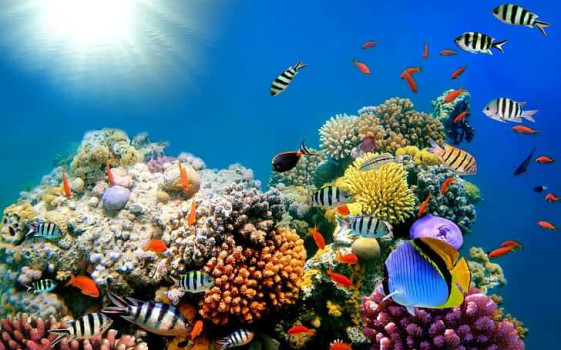
The world’s oceans – their temperature, chemistry, currents and life – drive global systems that make the Earth habitable for humankind. How we manage this vital resource is essential for humanity as a whole, and to counterbalance the effects of climate change.
Over three billion people depend on marine and coastal biodiversity for their livelihoods. However, today we are seeing 30 percent of the world’s fish stocks overexploited, reaching below the level at which they can produce sustainable yields.
Oceans also absorb about 30 percent of the carbon dioxide produced by humans, and we are seeing a 26 percent rise in ocean acidification since the beginning of the industrial revolution. Marine pollution, an overwhelming majority of which comes from land-based sources, is reaching alarming levels, with an average of 13,000 pieces of plastic litter to be found on every square kilometre of ocean.
The SDGs aim to sustainably manage and protect marine and coastal ecosystems from pollution, as well as address the impacts of ocean acidification. Enhancing conservation and the sustainable use of ocean-based resources through international law will also help mitigate some of the challenges facing our oceans.
List of targets
14.1Target
14.1 By 2025, prevent and significantly reduce marine pollution of all kinds, in particular from land-based activities, including marine debris and nutrient pollution
14.2Target
14.2 By 2020, sustainably manage and protect marine and coastal ecosystems to avoid significant adverse impacts, including by strengthening their resilience, and take action for their restoration in order to achieve healthy and productive oceans
14.5Target
14.5 By 2020, conserve at least 10 per cent of coastal and marine areas, consistent with national and international law and based on the best available scientific information
14.5Target
14.3 Minimize and address the impacts of ocean acidification, including through enhanced scientific cooperation at all levels
14.6Target
14.6 By 2020, prohibit certain forms of fisheries subsidies which contribute to overcapacity and overfishing, eliminate subsidies that contribute to illegal, unreported and unregulated fishing and refrain from introducing new such subsidies
14.7Target
14.7 By 2030, increase the economic benefits to small island developing States and least developed countries from the sustainable use of marine resources, including through sustainable management of fisheries, aquaculture and tourism